
Research Update: Making an Impact for GBM Patients
Glioblastoma (GBM) is the most aggressive form of brain cancer with a uniformly fatal diagnosis, limited treatment options, and a median survival of less than two years.
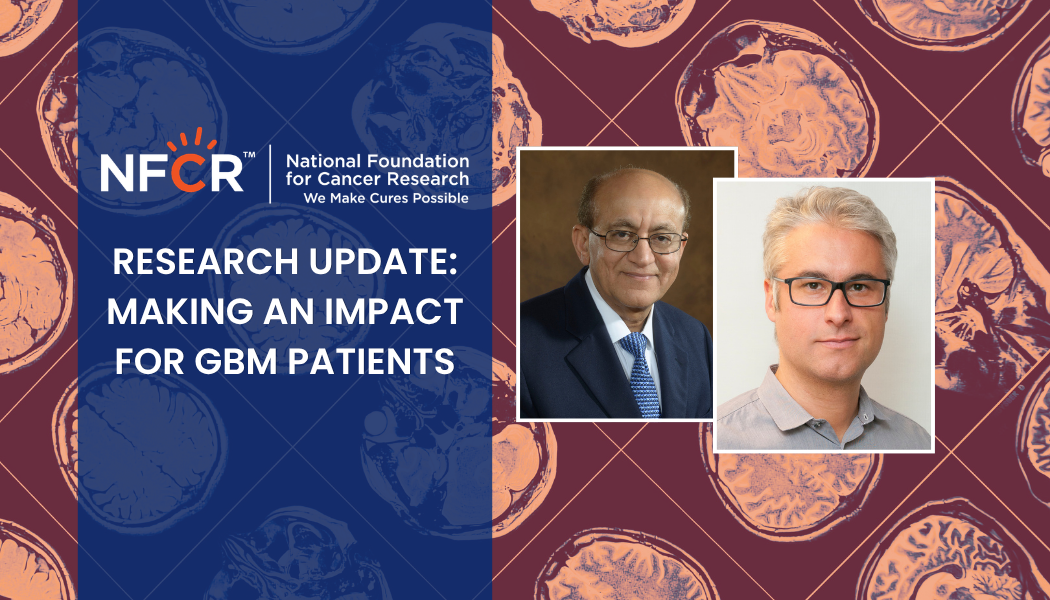
Although chimeric antigen receptor (CAR)-T cell immunotherapy has revolutionized the treatment of certain cancers, including blood cancers, its efficacy against solid tumors, such as GBM, remains lacking. With NFCR support, Dr. Rakesh Jain, a renowned leader in the tumor microenvironment (TME), and Dr. Mario Suva, a leader in neuropathology, are hoping to develop an immunotherapy for GBM.
Can Immunotherapy Transform GBM Treatment?
Their collaborative research is exploring losartan, a safe, inexpensive drug prescribed to control blood pressure and an antiangiogenic (anti-VEGF) drug, to improve the effectiveness of CAR-T cell therapy. The teams found that adding losartan to immunotherapy significantly slowed tumor growth and improved survival in animal models.
The results also showed that losartan improved immune cell function in the TME. Since losartan is already approved by the FDA and considered safe, these findings could quickly lead to new clinical trials and potentially help patients with GBM, where all immunotherapies have failed to date in randomized phase III trials. The scientists are also investigating the role of Wnt signaling, a pathway that drives GBM growth and helps tumors evade the immune system.
Preliminary results show that blocking Wnt signaling, combined with immunotherapy, significantly prolonged survival in GBM-bearing animal models by reducing immunosuppressive cells and increasing immunostimulatory cells in the TME.
Dr. Suva, a leader in single-cell gene expression (transcriptomics) in GBM, is performing spatial transcriptomic profiling of GBM models treated with a Wnt inhibitor alone or with losartan. This analysis will provide insights into immune cell localization and interactions within the GBM TME, clarifying the mechanisms underlying the therapeutic benefits of this combination therapy.
What is at Stake for Cancer Patients:
By combining anti-VEGF therapy, Wnt inhibition, CAR-T cells, and TME reprogramming with losartan, these dedicated researchers hope to develop a powerful, multimodal treatment that could save the lives of patients with GBM, for whom current immunotherapies have had limited success.