
Research Update: Improving Technology to Access Circulating Tumor Cells
Cancer can spread when tumor cells leave the tumor and enter the bloodstream. These cells, called circulating tumor cells (CTCs), provide a valuable opportunity to study because CTCs reflect the current state of the disease. CTCs can help clinicians and researchers better understand how cancer evolves over time and responds to treatment.
NFCR, with support from the Sorenson Legacy Foundation, launched a joint initiative to improve the isolation of these rare cancer cells from blood and to develop conditions that allow them to survive and grow in the laboratory. Traditionally, this has been especially challenging because CTCs are extremely rare and easily damaged during the extraction process.
Progress Made with NFCR Support on How We Access CTCs
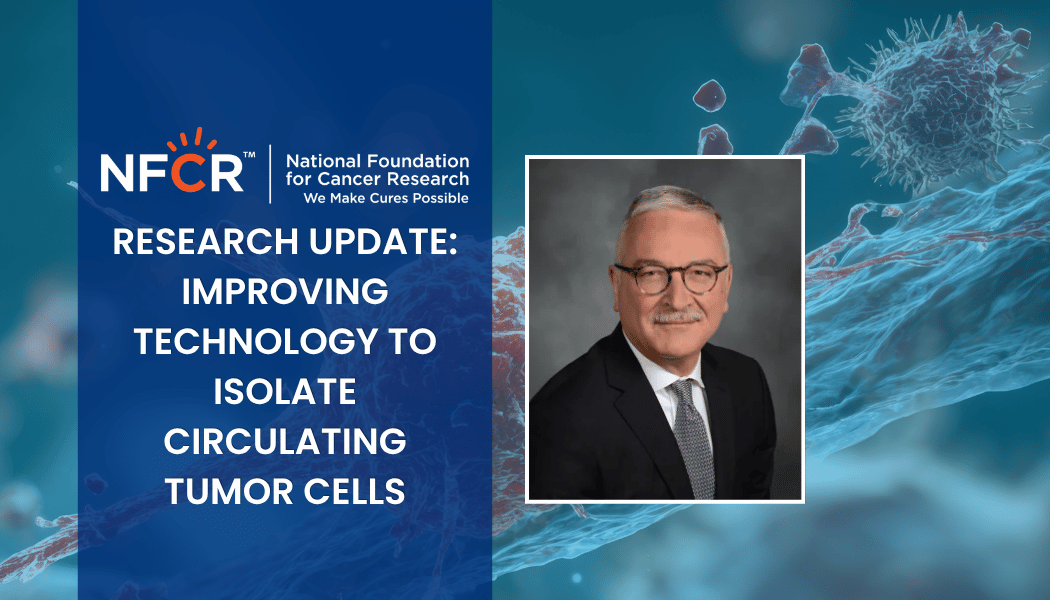
Dr. Massimo Cristofanilli at Weill Cornell Medicine and his team evaluated several advanced technologies to enrich CTCs from blood samples. They identified approaches that recovered a higher proportion of viable cancer cells while reducing contamination from normal blood cells. Using these optimized methods, the researchers recovered a substantial fraction of tumor cells in laboratory test samples while preserving key biological characteristics.
The research then focused on developing growth conditions that better mimic the tumor’s natural environment.

By adjusting oxygen levels and adding supportive vascular cells, the scientists created conditions that allowed CTCs to form small tumor formations. In laboratory models, tumor growth was achieved from as few as 5 to 15 cells and maintained for several weeks.
Importantly, Dr. Cristofanilli’s team applied this pipeline to blood samples from patients with metastatic breast and colorectal cancer and successfully recovered viable cancer cells. In a subset of samples, these cells formed short-term tumor clusters, demonstrating the feasibility of growing patient-derived cancer cells from blood.
While further work is needed to improve long-term growth, this research represents an important step toward using blood-based samples to study cancer progression and treatment response. In the future, this approach could support more personalized cancer care and reduce the need for invasive biopsies.
NFCR CTC Initiative: Assessing in Real-time a Tumor’s Characteristics
NFCR’s collaborative initiative of ten leading researchers utilizing an advanced cancer cell diagnostic technology is providing an increased understanding of live cancer cells or circulating tumor cells (CTCs) in the bloodstream in real-time.
The inclusive understanding of the tumor microenvironment at the cellular, genomic, transcriptomic, and proteomic levels is accelerating early detection and monitoring of advanced cancer, determining treatment response, and identifying targets for precision medicine to save more lives.
NFCR is grateful to the Sorenson Legacy Foundation for its generous support of the advanced cancer cell diagnostic program.