
Turning Promise into Progress: Highlights from the 2026 NFCR Global Summit
On October 9, the National Press Club in Washington, D.C., was filled with scientists, clinicians, entrepreneurs, donors, advocates, patients, and friends for the 2026 NFCR Global Summit for Cancer Research and Entrepreneurship. From an early-morning scientific symposium to an evening dinner honoring a researcher whose curiosity changed clinical practice, the day kept returning to one question: how do we turn scientific promise into real progress for patients?

A Welcome Rooted in Community
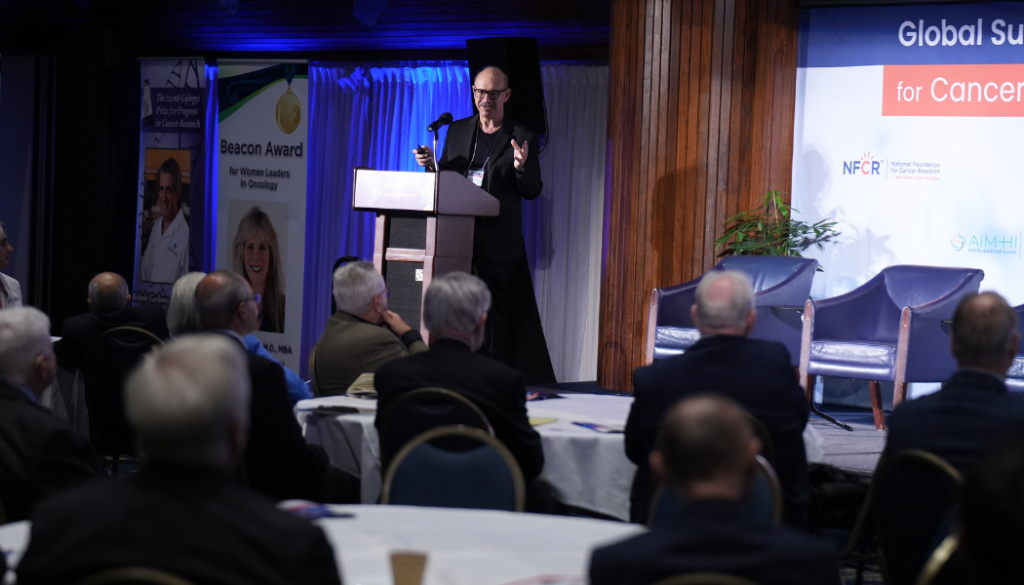
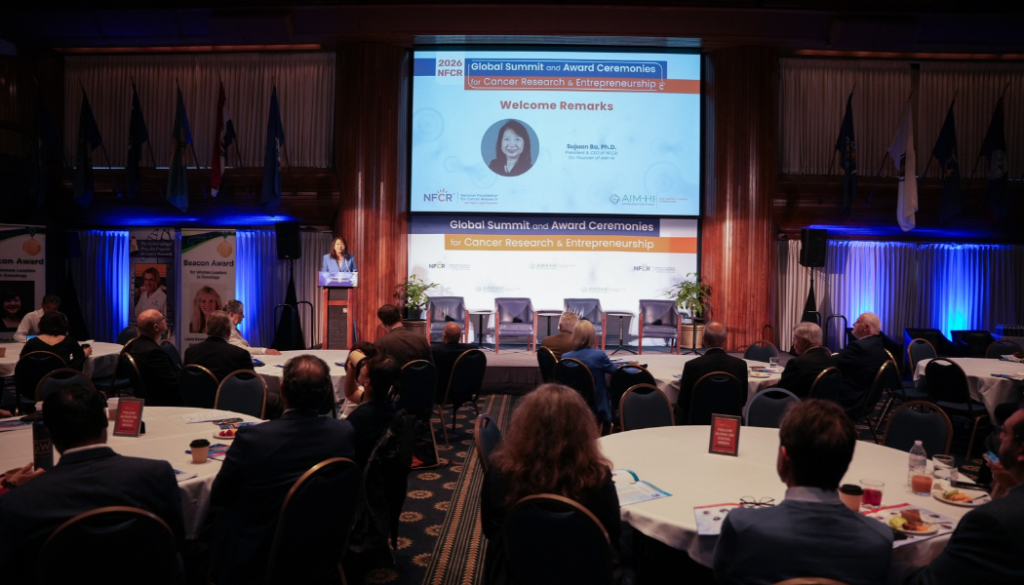
Dr. Sujuan Ba, NFCR’s CEO and President, opened the day by thanking longtime friends who return each year and welcoming newcomers. She had just come from the World Cancer Congress in Hong Kong, where more than 2,000 delegates from 125 countries gathered, and said she came home with both a renewed commitment and a renewed sense of the challenges.
For more than 50 years, she reminded the room, NFCR has backed scientists willing to pursue hard questions, including those whose answers may take years to emerge. Donors make that sustained commitment possible. Last year’s Summit put artificial intelligence at the center; this year’s challenge was to turn that promise into progress. She offered one example: a digital twin conversation from the 2025 Summit has become a research project with Dr. Ludmil Alexandrov on early-onset colorectal cancer. To her, that is one of the most meaningful things a summit can do: a conversation becomes a collaboration, and a promising idea begins to move.
From Positional Cloning to Prevention
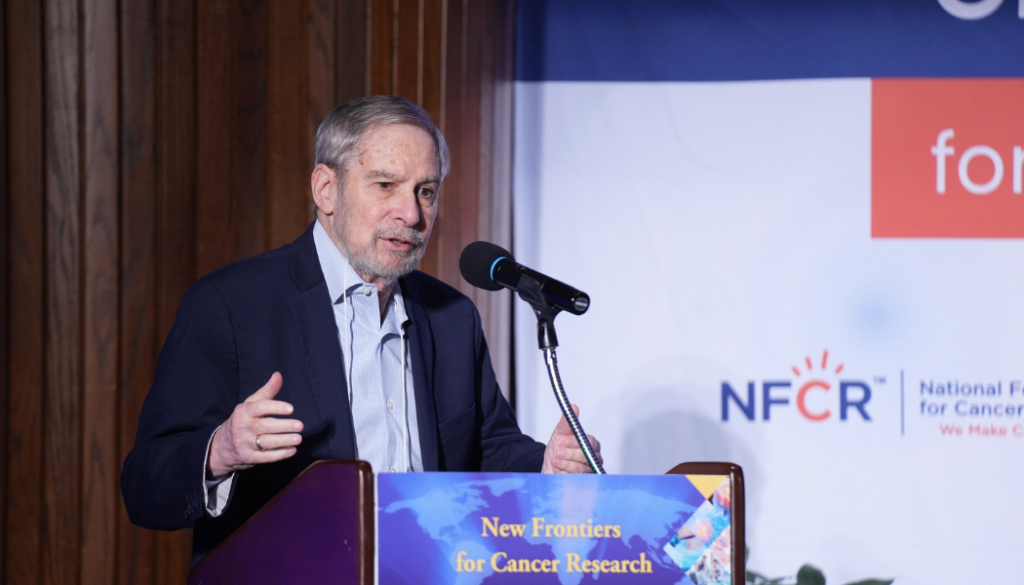
Dr. Webster Cavenee, Chair of NFCR’s Scientific Advisory Board, opened the morning with a look at science at NFCR and how the foundation’s funding has evolved alongside it. Nobel laureate Dr. Bruce Beutler followed with the keynote. He traced his path from biochemistry to genetics: the TNF research that helped lead to Enbrel, the Toll-like receptor discovery that earned him the 2011 Nobel Prize in Physiology or Medicine, and his later work on positional cloning, using mouse genetics to find the genes behind disease.
One Dose, Lasting Protection
Dr. Douglas Lowy, Deputy Director of the National Cancer Institute, shared what has happened with the HPV vaccine since he and Dr. John Schiller received the Szent-Györgyi Prize in 2018. The strongest news is about dosing. In a Costa Rica trial with more than 4,000 women per arm, a single dose of either vaccine was not inferior to two doses, with more than 97% protection. Antibody levels after one dose decline by only about 2% per year, far slower than those for the hepatitis B vaccine.
The real-world numbers are striking. In Denmark, women vaccinated at 16 or younger had almost 90% lower rates of cervical cancer. Today the vaccine is used in more than 160 countries, over 90 of which have moved to single-dose schedules, and the Gates Foundation estimates it has already prevented nearly 1.5 million future deaths. Dr. Lowy’s closing point was that millions more are within reach.
Google, AI and Lowering the Bar to Build
Dr. Kapil Parakh, a cardiologist and Senior Medical Lead at Google, stepped in for Google’s originally scheduled speaker. He described AI’s three eras (rules-based, machine learning, and today’s generative AI) and made the case that these tools are within reach of people who have never written code. He described using Gemini to turn a team’s priorities into a shared plan in hours rather than weeks. For researchers, he pointed to multi-agent systems such as Google’s “co-scientist,” which has AI agents compete to produce the strongest hypotheses, and to free tools that can summarize a field or turn a dense paper into a podcast.
“The question for you all,” he said, “is how will you use this to drive impact in your work?”
Panel I: AI and Cancer Detection
Dr. Funmi Olopade of the University of Chicago Medicine moderated a candid discussion with Dr. Bill Lotter of Dana-Farber, David Hall of Hill Research, and Dr. Parakh. Is AI hype or reality? Dr. Lotter placed it “somewhere in the middle”: FDA-cleared tools already help radiologists read mammograms, but a risk score only matters if it points to a clear clinical action. Hall stressed co-designing tools with clinicians and patients from the start.
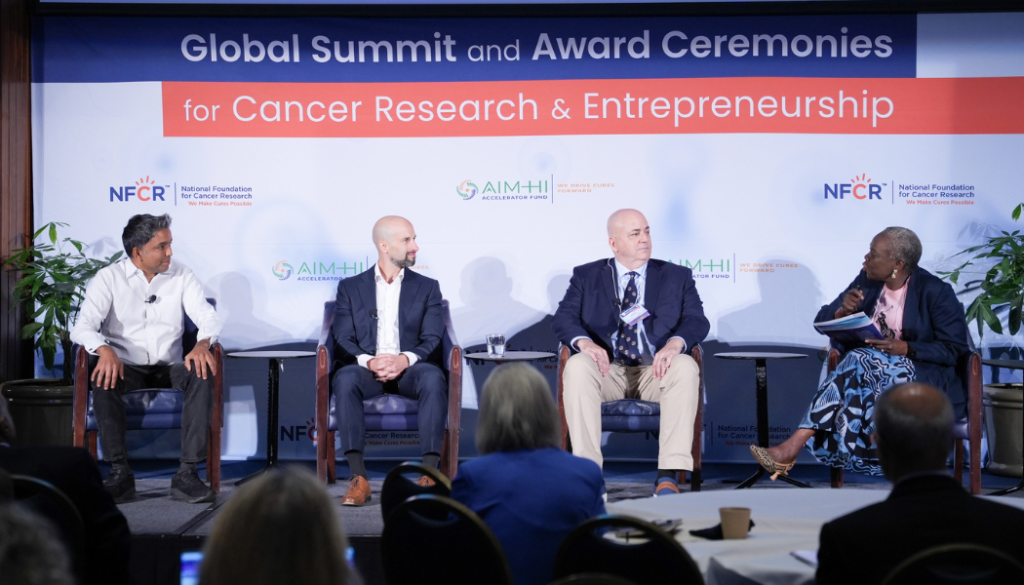
Several themes ran through the hour. Bias often traces back to the data itself, so understanding where it originates can matter more than building a more sophisticated model. Mammograms might one day flag heart disease risk as well as breast cancer risk. And the panelists agreed that AI should augment clinicians rather than replace them. As Dr. Parakh put it, AI can help “lift up the floor” and reduce medical error. Dr. Olopade closed by arguing for bringing these tools into the communities that stand to benefit most.
Molecular Twins and Early-Onset Colorectal Cancer
Dr. Ludmil Alexandrov of UC San Diego described what he called “legacy science,” his team’s analysis of mutational signatures in colorectal cancer, and where his lab is heading. Early-onset colorectal cancer is rising in dozens of countries and is now the leading cause of cancer deaths in young adults. His team found that a signature from colibactin, a toxin produced by certain gut bacteria, is far more common in early-onset cases: about half of patients under 40, versus fewer than 15% over 70.
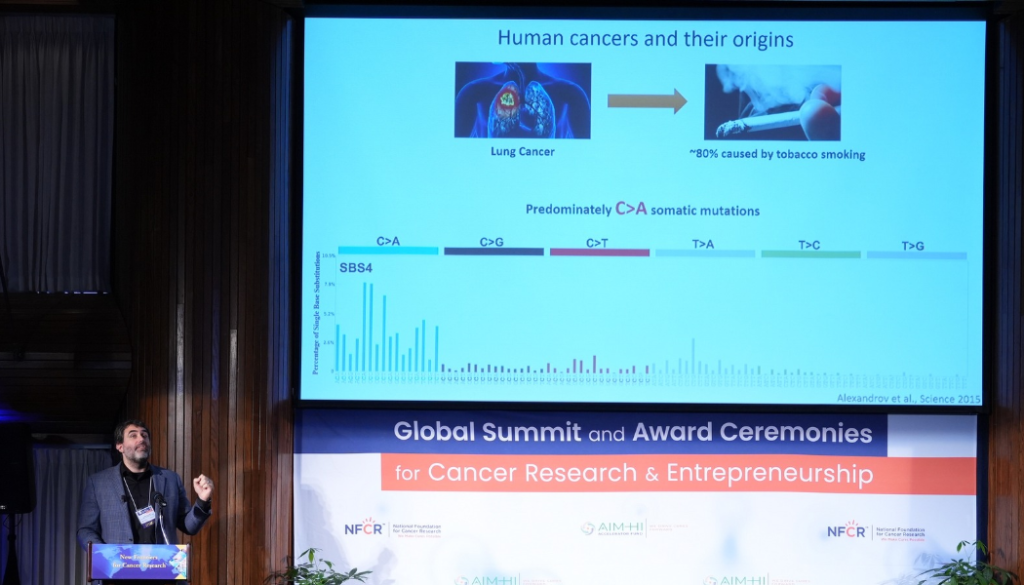
The evidence suggests exposure very early in life, possibly in the first 18 months. In biopsies from children, roughly 40% showed the signature.
Looking forward, he and Dr. Kimmie Ng of Dana-Farber will use NFCR support to build a “treatment twin”: a model that combines a patient’s genomic, pathology, imaging, and clinical data, updates it every few months, and predicts response to first-line therapy. The study will include 200 early-onset patients, many followed prospectively. Today, young patients are treated with guidelines written for older adults.
Panel II: AI in Real-World Oncology Care
Dr. Josefa Briceño of AstraZeneca moderated a discussion on bringing AI into patient care. Panelists were Dr. Teresa Davoli (NYU), Dr. Dan Theodorescu (University of Arizona Cancer Center), Dr. Bruce Johnson (Dana-Farber), Dr. Neil Farber (UC San Diego), and Dr. Alexandrov.
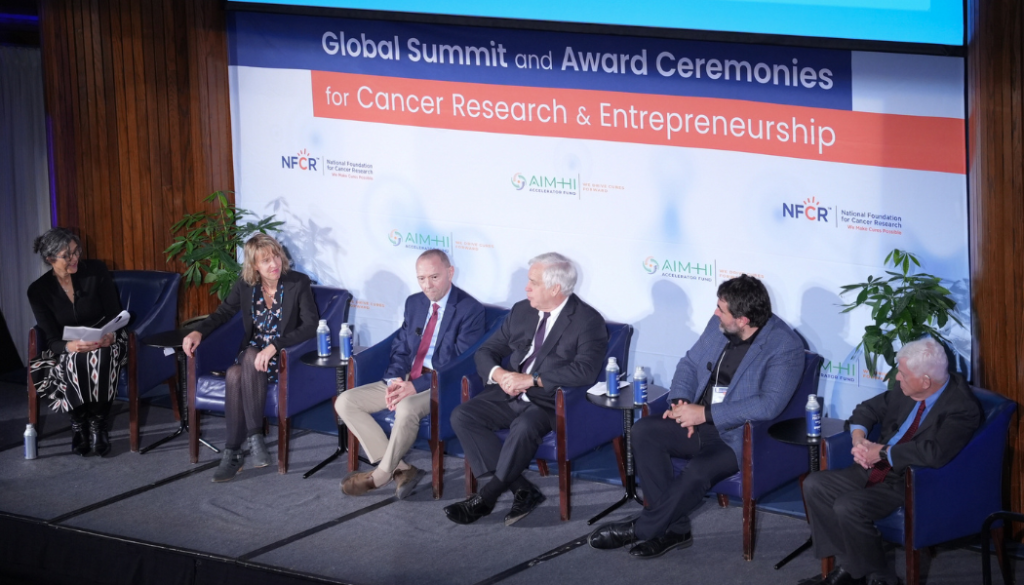
Dr. Alexandrov said a grad student in his lab now runs 25 AI agents in place of manual data analysis. Dr. Davoli described a deep learning model that predicts a chromosomal marker tied to immunotherapy response directly from a pathology slide. Dr. Theodorescu, who coined the term “molecular twin,” explained that twins can anchor both a futuristic patient-matching system and a practical, affordable marker panel. Dr. Johnson shared a cautionary tale: an early trial-matching tool identified 50,000 eligible patients, yet only ten were enrolled in four years. Technology alone is not enough.
Trust and equity were the other strong threads. Dr. Farber warned against drifting back to paternalistic medicine, and argued that AI’s best use is freeing clinicians to spend more time looking at the patient. Panelists agreed that AI is only as fair as its data. Dr. Briceño noted that models trained mostly on light skin can miss melanoma in Black patients.
A Summary of the Morning
Dr. Raju Kucherlapati of Harvard Medical School wrapped up the morning. He noted that a new drug typically takes about 15 years and $2.5 billion to develop, and that AI is one of the best opportunities to change that. Like recombinant DNA decades ago, he said, it is another technology with the capacity to bring the best care to people everywhere.
Honoring Dr. Michele Carbone
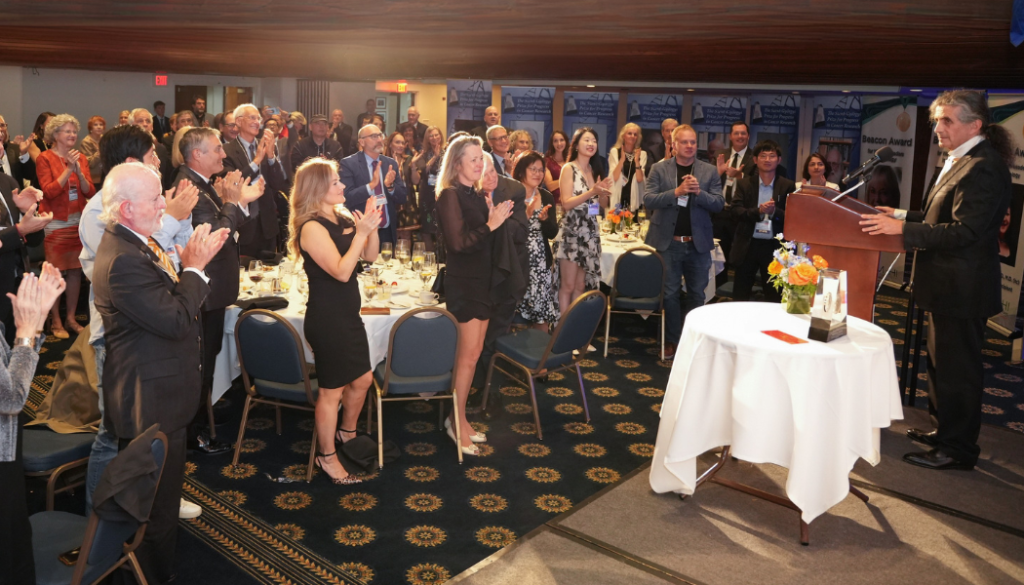
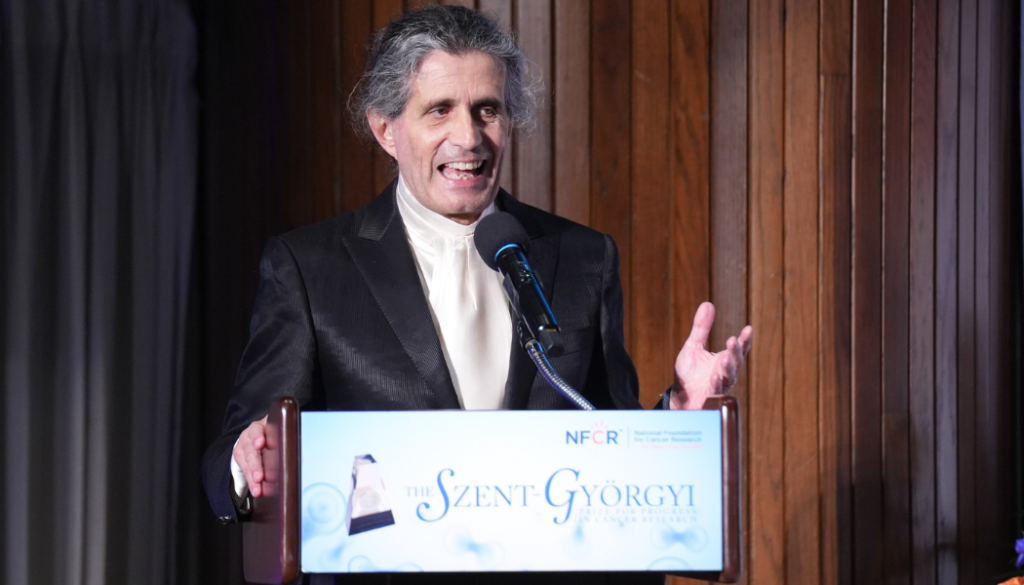
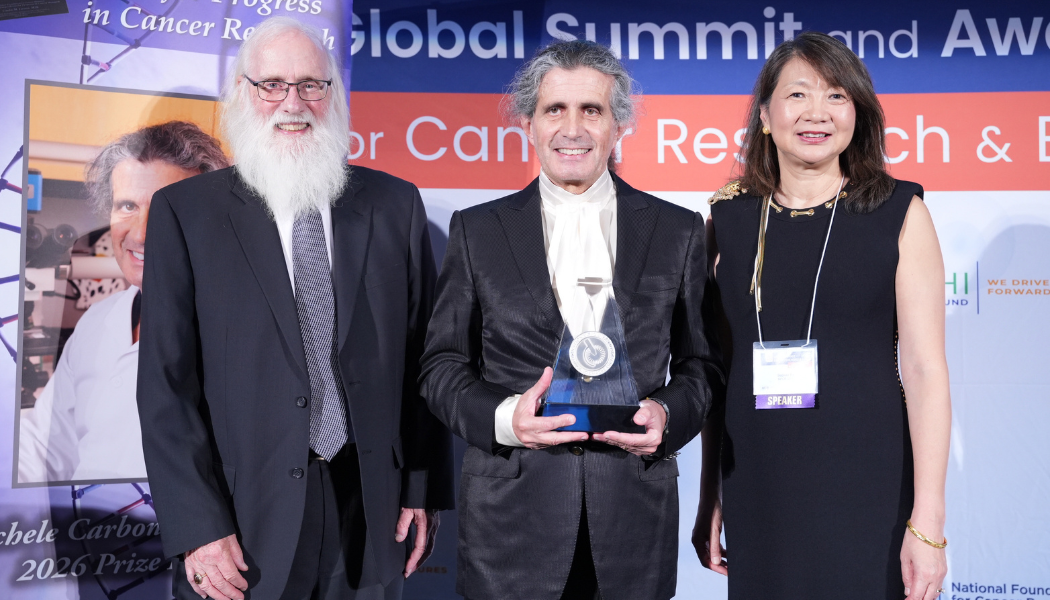
The evening’s dinner and award ceremony celebrated Dr. Michele Carbone of the University of Hawaii Cancer Center as the 2026 Szent-Györgyi Prize winner. Dr. Tony Hunter of the Salk Institute, the 2025 winner and chair of this year’s selection committee, told the story of the discovery. Mesothelioma had long been considered a disease caused only by asbestos. In the 1990s, Dr. Carbone visited villages in Cappadocia, Turkey, where half of the deaths were from mesothelioma. He built family trees spanning six generations and 526 people, and showed that susceptibility was inherited. That work led, in 2011, to the discovery of mutations in the BAP1 gene.
In his talk, Dr. Carbone credited his team, the NCI and, above all, the families he has worked with for decades. He described how patients with inherited BAP1 mutations often survive for years, with a median of about seven years, far longer than patients with other forms of mesothelioma. He also described how the work moved beyond the lab. After he presented his findings, the Turkish government relocated the affected villages and opened a clinic. In North Dakota, the discovery of erionite in gravel prompted the state to repave 300 miles of road. Today, ASCO guidelines recommend germline BAP1 testing for patients with mesothelioma.
Closing: Progress Takes All of Us
Silas Deane, Chair of the NFCR Board, closed the evening by thanking the NFCR staff, the board and the sponsors, among them AstraZeneca and Novartis, whose support makes the Summit possible. He spoke plainly about the uncertainty in federal research funding. When promising work is interrupted, he said, we risk losing years of data and the young scientists who might one day take the stage.
To meet that moment, he announced a personal pledge to match donations up to $150,000 between now and the end of the year, so that every gift to NFCR is doubled. His closing: “We are a family. Together we can make the cures possible.”
Your support is so important. It helps scientists sustain promising work, gives young researchers a chance to build their careers, and allows bold ideas to move forward through uncertain times.
Looking Ahead
Discoveries move fastest when scientists, clinicians, entrepreneurs, donors and families work together. Thank you to every speaker, attendee, sponsor and volunteer who made the day possible.