A Complex Experience: Cassandra’s Story
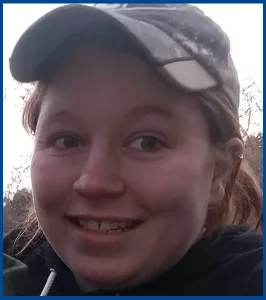 Cassandra Frary knew what she wanted her life to look like from a young age. She met her future husband when they were only in high school and by the time her mid-twenties rolled around she was happily married, had the sweetest baby boy, and was working in her chosen profession as a nurse. She was eager to picture what wonderful things life had in store – from her baby’s first day at kindergarten to celebrating every exciting milestone with the man she loved. Her health was of some concern, having a rare genetic disorder which caused a mutation in her SDHB gene, but it never crossed her mind that her time with her husband and son may be cut short.
“The SDHB gene is a tumor marker that causes suppression of tumors,” she explained. “That means that I am prone to getting paragangliomas and pheochromocytomas. They are little balls that grow along your nerve ends. They can be cancer producing or they can be cancerous themselves.”
This genetic disorder is hereditary and shared between Cassandra and her mother. Her mother had a non-cancerous tumor which resulted from the genetic disorder and thankfully never had many other complications beyond that. After living with the disorder her entire life, it was pushed to the back of her mind. She often experienced palpitations, sweats, and anxiety caused by the mutation, but it became as normal to her as breathing.
“In December 2018 I had a CT scan for abdominal pain,” Cassandra shared. “That was the only symptom that wasn’t related to my disorder. They found a tumor on my kidney and scheduled an MRI for a better look.”
Cassandra was shocked to learn that she had a cancerous tumor on her kidney. The care team assured her that the tumor was small enough to be removed by surgery. Soon after learning about the tumor, she was scheduled for a seven-hour surgery.
“I was depressed and scared,” she reflected. “I had an 18-month-old at home, a full-time job, and just enough money to get by.”
Though the months seemed to fly by in the blink of an eye, Cassandra didn’t receive a clean bill of health until October 2019 – nearly a year after her first cancer-related presentation. Her doctors informed her that she will need to visit her endocrinologist once a year for blood work moving forward. She was also told she would have to undergo frequent MRIs to allow continued monitoring of her situation.
“One of the most difficult parts was knowing that this was genetic, and my son might be affected by it as well,” Cassandra shared. “We had him tested and it was the most stressed I have ever been in my life. I can’t express how excited I was when his results came back negative. He is clear!”
As Cassandra reflected on the most frightening time in her life, she was able to speak in a frank yet sincere way. Though she is able to speak so professionally about her experience, she admits that the experience was anything but ‘cut and dry’.
“People have a lot of misconceptions about cancer and cancer treatment,” She stated. “It is not cut and dry, you experience so much more than losing your hair. Treatment is hard. I see it as a nurse and I experienced it firsthand. It’s a very complex experience.”
To learn more about kidney cancer and the NFCR related research projects click here.
Additional Reads You May Enjoy:
Kidney Cancer Detection Advances
Beating Colorectal Cancer at Age 23: Faith Kept Me Going
Stay connected with us! Receive our monthly e-newsletter and blogs featuring stories of inspiration, support resources, cancer prevention tips and more. Sign up below:
A world without cancer is possible. Help us turn lab breakthroughs into life-saving realities.

5.7 Million+
Donors who have fueled NFCR’s mission

$420 Million+
Invested in high-impact research & programs

36+ Labs & Hundreds of
Nobel Laureates & Key Scientists received NFCR funding, driving breakthrough research