
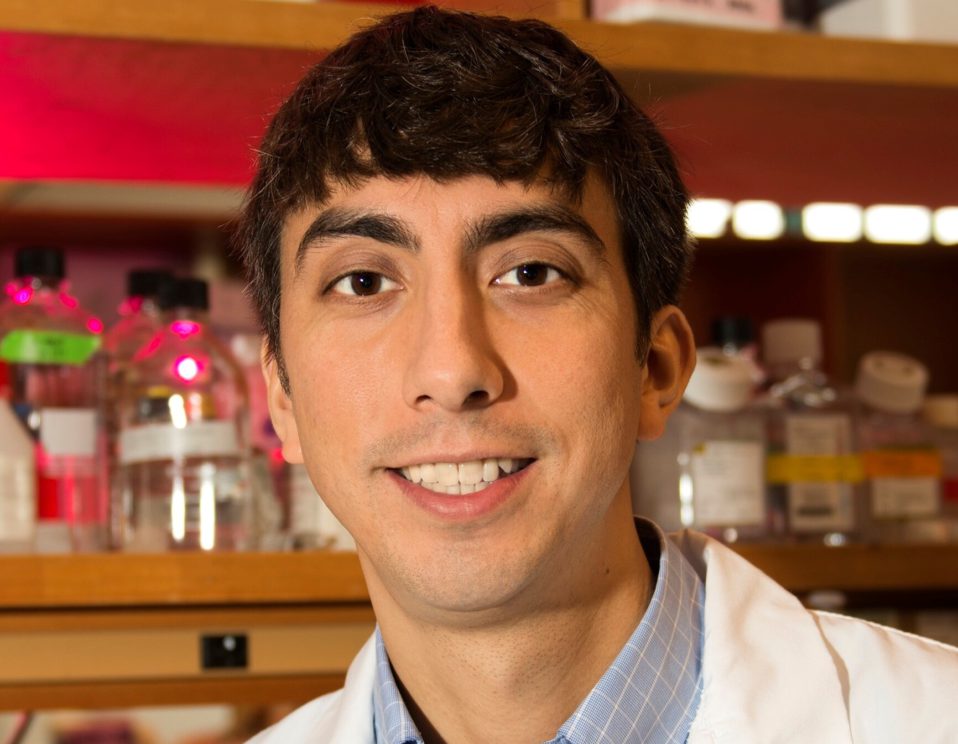
Associate Professor of Medicine
Assistant Physician
Harvard Medical School and
Massachusetts General Hospital
Boston, Massachusetts
Cancer-Types Supported
Click a cancer type below to learn more:
Research Projects
Dr. Aaron Hata is a physician-scientist in the field of targeted molecular cancer therapy. The overall goal of his research is to improve the efficacy of targeted therapies for lung cancer. His research focuses on understanding the molecular mechanisms of drug sensitivity and resistance in non-small cell lung cancer (NSCLC).
With NFCR support, Dr. Hata is collaborating with thoracic oncologist, Dr. Jessica Lin at Harvard, to improve the care of patients with mutations in the ALK gene (called ALK positive or ALK+.)
ALK+ patients eventually experience drug resistance to the 1st, 2nd and 3rd line therapies called tyrosine kinase inhibitors (TKI). In addition, other ALK-independent pathways in the cancer cells can begin to signal abnormal growth. Thus, the ability to match each patient with the therapy that is most likely to be effective remains a significant challenge.
Understanding the mechanisms by which cancers gain resistance to ALK inhibitors is critical in developing new effective treatment options for patients. Over the recent years, much has been learned about genomic alterations that lead to acquired drug resistance. Yet, the mechanisms of drug resistance remain unknown for a substantial proportion of patients because they are not caused by genomic changes.
In this project, Drs. Hata and Lin analyzed tumor cells and surrounding non-tumor cells in patients who have become resistant to ALK inhibitors and identified changes that are associated with non-genomic drug resistance. In some cases, they found several different causes contributing to drug resistance, with co-existing genomic and non-genomic mechanisms. This may explain why ALK inhibitors work better as initial rather than later-line therapy, providing a biological rationale for using the most advanced ALK inhibitors in the first-line setting.
In parallel, they isolated tumor and fibroblast (the major supporting cell in the tumor microenvironment) cells from ALK+ lung cancers and developed methods for culturing them together to mimic their interactions in tumors. They identified several pathways that are activated by crosstalk between fibroblasts and tumor cells and have found that this is a general phenomenon that occurs in different types of lung cancers when treated with targeted therapies. Some of these pathways may provide new targets for developing more effective therapies that target both tumor cells and the surrounding supporting cells.
Background
Aaron N. Hata, M.D., Ph.D. is an Assistant Physician at Massachusetts General Hospital and an Assistant Professor of Medicine at Harvard Medical School. His laboratory focuses on understanding how acquired resistance to targeted therapies evolves during therapy in NSCLC patients with mutations in KRAS, EGFR, and ALK genes and development of new therapeutic strategies for testing in the clinic.
He has developed a program generating patient-derived xenograft (PDX) NSCLC models as a resource for his research studies as well as the larger Harvard community. Dr. Hata works closely with thoracic oncologists, interventional pulmonologists, and thoracic surgeons to lead a lung cancer translational research program. This effort incorporates analysis of clinical samples and development of patient-derived tumor models, and basic mechanistic laboratory investigation.
Dr. Hata is also an Investigator with Ludwig Cancer Research Institute at Harvard and leads the institute’s lung cancer sub-group. He collaborates with industry partners in pre-clinical and clinical development of novel targeted therapies for lung cancer. He is also a co-investigator on the Stand Up to Cancer (SU2C) Lung Cancer Dream Team in addition to other dynamic lung cancer collaborations.
Dr. Hata obtained his Ph.D. and M.D. at Vanderbilt University School of Medicine with his Ph.D. in Pharmacology. He completed his residency in Internal Medicine at Brigham and Womens Hospital and a Fellowship in Oncology at Dana-Farber Cancer Institute.
Collaborator:

Our approach emphasizes a collaborative, team environment to accelerate new breakthroughs.