
Research by Type:
| Rakesh Jain, Ph.D. |
|
Massachusetts General Hospital,
Background Primary brain cancers pose immense challenges for effective treatment. The most common form of brain cancer in adults is glioblastoma, which originates from glial cells, the non-neural supportive cells in the brain. Glioblastoma is extremely aggressive. Malignant tumor cells readily invade and migrate locally and blend with neighboring normal brain tissue, causing damage to critical neural functions and often leading to lethal tumor recurrence. In 2011, there will be at least 22,000 new diagnoses of primary cancers in the brain or nervous system in the U.S. and more than 13,000 lives will be lost to these cancers. Fortunately, the death rate from primary brain cancers has decreased somewhat over the past three decades in the U. S., thanks to progress made in the treatment of this disease. Still, only about one out of every three patients with primary brain cancer will survive longer than five years after initial diagnosis. Further improvement in survival rates for brain cancer patients is critically needed, and this will require that we develop much more effective therapies. Vascular endothelial growth factor (VEGF) is used by tumors to make new blood vessels to supply blood and nutrients for tumor growth - a process called angiogenesis. Anti-angiogenic therapy blocks the VEGF pathway and aims to starve tumors of nutrients and oxygen and stop their growth. Bevacizumab, an anti-VEGF antibody, is one of the anti-angiogenic therapies, and is able to specifically bind to and inhibit the VEGF. This therapy is available for patients with glioblastoma and those with colorectal, lung, or kidney cancer. For glioblastoma patients, the results of anti-VEGF are only short-lived: although some patients may initially respond well to this treatment approach, in all cases, the tumors eventually re-grow. Identification of cell molecules or biomarkers that indicate tumor progression during anti-angiogenic therapy is urgently needed to guide the development of new treatments that will stop the growth of glioblastoma.
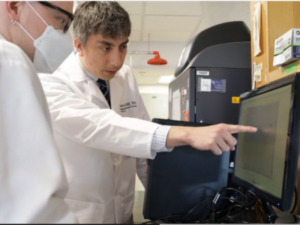
Project Director and Research Recently, world-renowned NFCR scientist on angiogenesis, Rakesh K. Jain, Ph.D., at Massachusetts General Hospital, and his team identified, for the first time, two molecular biomarkers that are present at high levels in glioblastoma cells after patients have undergone anti-angiogenic therapy. These biomarkers may drive the tumor to progress, causing resistance to therapy. The Jain team is working tirelessly to confirm these intriguing findings and explore other potential molecular mechanisms of treatment resistance. NFCR is proud to support Dr. Rakesh Jain, a leader we know can answer these critical questions in brain tumor anti-angiogenic therapy and lead the research community to develop new and more powerful treatments for this deadly cancer. Dr. Jain and his collaborators, a team of leaders in the field of clinical oncology and new therapy development for brain cancer patients, have several ongoing clinical trials that treat glioblastoma patients with the newest targeted therapies. Previously, Dr. Jain and his collaborators on colorectal cancer completed a Phase II clinical trial using bevacizumab with chemoradiation therapy in rectal cancer patients. Systemic analyses demonstrated that the blood VEGF and PIGF (placental growth factor) increased in rectal cancer patients after receiving bevacizumab. Furthermore, these findings have been reproduced by Dr. Jain's own team and other research teams in several other tumor types that use a variety of anti-angiogenic agents, making the blood VEGF and PIGF the most promising molecular markers for measuring the effect of anti-angiogenic agents.
Impact on Cancer Prevention, Treatment, or Cure NFCR is proud to support Dr. Rakesh Jain, a leader who is providing the answers to the critical questions on biomarkers in anti-angiogenic therapy for brain, colorectal, and other deadly cancers. The promising molecular markers discovered in Dr. Jain's laboratory have the potential to become the first biomarkers in evaluating the effectiveness of anti-angiogenic therapies and the resistance that develops to them. Moreover, these markers will allow in-depth understanding of the biological response of individual patients to a given treatment, thus making it possible to create individualized therapy, and maximizing the treatment efficacy to each patient. Dr. Jain is leading the research community to translate these research discoveries into new and hopefully more effective, therapies for these patients.
|