
|
University of Colorado Denver, Colorado
 Improving Breast Cancer Treatments
Estrogen and progesterone are female sex hormones produced mostly by the ovaries and play a significant role in breast development and uterine function. In women, estrogen and progesterone stimulate cell division and therefore stimulate growth in the breast and uterus. But because these cells divide more rapidly, they also have a higher likelihood of becoming malignant, which is characterized by quick, out-of-control growth. Therefore, prolonged exposure to sex hormones enhances a woman's likelihood of developing breast cancer. In fact, if her ovaries are removed before age 35, her likelihood of developing breast cancer is reduced by more than 95 percent.
Even though 70 - 80 % of breast cancer patients have tumors that depend upon the hormone estrogen for their growth, many of the patients' tumors have an intrinsic resistance or to anti-estrogen therapy such as tamoxifen or will develop resistance after beginning the therapy. A more thorough understanding of how estrogen and progesterone influence tumor growth and how resistance occurs to anti-estrogen therapy can have a profound impact on established treatments for breast and uterine cancers in women.
Project Director Expertise
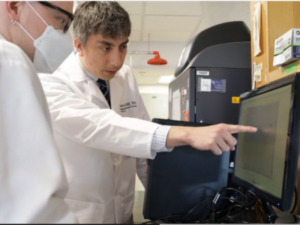
Kathryn Horwitz, PhD, is Professor of Endocrinology and Molecular Biology at the University of Colorado Health Sciences Center in Denver, Colorado. As a leading NFCR Project Director, she is committed to understanding the role that sex hormones play in the development and progression of breast cancer and the cause of resistance to the anti-estrogen drugs such as tamoxifen. NFCR has been funding Dr. Kathryn Horwitz for 26 years and her research is finding better long-term treatments to fight this devastating disease, which is the most common cancer in women.
NFCR Research
Previous research by other scientists had confirmed that estrogen acts as a hormonal "agonist"-meaning it can stimulate tumor growth. As an agonist, estrogen travels to different sites within the body that have estrogen receptors (ER) or proteins that bind to the hormone and signal to the cell to begin an activity. In breast tissue, estrogen binds to the receptors inside the cell where it may activate cell events to initiate breast cancer. However, Dr. Horwitz was the first scientist to discover that the hormone progesterone also plays an important role in breast cancer. Through intensive study, she identified progesterone receptors (PR) in breast tumors and showed that these markers were an even better predictor of whether a tumor would respond to tamoxifen treatment. As a result of her finding, pathologists routinely conduct chemical tests on tumors removed during surgery to identify if both ER and PR are present.
Dr. Horwitz has explored how to block estrogen's agonist activity by using an "antagonist" like tamoxifen which blocks the ER so estrogen cannot bind to it and begin tumor growth. Sometimes, however, hormonal antagonists such as tamoxifen stop working. Tumors may initially respond to tamoxifen by shrinking, but then may become resistant and resume growing. In fact, antagonists may actually become agonists, stimulating tumor growth rather than suppressing it.
Identifying Genes and Proteins that Indicate a Patient's Response to Therapy
Using a DNA chip (or microarray technology), Dr. Horwitz has recently identified genes and biomarkers in biopsies from patients enrolled in a clinical trial which indicate which tumors will respond to anti-estrogen therapies and which will be resistant, even at the outset of treatment. Pre-treatment testing for these gene signatures will help doctors more accurately identify those patients whose tumors will respond to hormone therapy, allowing them to get the most benefit from their treatment. In addition, some of these newly discovered genes may be potential targets and biomarkers for new therapeutic strategies for patients whose tumors will not respond to anti-estrogen treatments.
Targeting Rare Breast Cancer Cells That May Cause Cancer to Return After Treatment
30% or more of ER+PR+ cancer patients see their tumor return after being "cancer-free" for years, even decades, following anti-hormone and chemotherapy treatments. Dr. Horwitz believes that these tumors contain a rare type of "treatment-resistant" cell-that remains dormant or asleep, only to reawaken years later and grow new tumors. With a new method developed by Dr. Horwitz, her team already has identified treatment-resistant cells in tumor samples from patients after a short-term anti-hormone therapy. The group is now actively looking for these cells in tumor biopsy samples from patients whose cancer has returned after ten years - this is to confirm that treatment-resistant cells do survive long dormant periods and then begin growth of new tumors. Meanwhile, the team is also developing breast cancer treatment-resistant cell lines to identify biomarkers for the development of therapeutic agents that can kill these cells. With the work by Dr. Horwitz and her dedicated team, it may be possible that in the foreseeable future, ER+PR+ breast cancer patients may no longer need to fear for their cancer to return.
Pregnancy Associated Breast Cancer
In addition to continuing the above research, Dr. Horwitz is working with pregnant women who have pregnancy associated breast cancer (PABC), the most common cancer during pregnancy. About 20-30% of breast cancers among premenopausal women are related to pregnancy, and these cancers tend to be more aggressive, more advanced, and have a poorer prognosis than breast cancer in non-pregnant women of the same age. Dr. Horwitz has identified 144 genes in PABC that are significantly overexpessed. Such genes may provide specific therapeutic targets for women with PABC to help improve treatment and survival for these patients.
Impact on Cancer Prevention, Treatment, or Cure
Dr. Horwitz has made significant contributions to the understanding and treatment of breast cancer. She has identified a very reliable way to predict which tumors will respond to tamoxifen treatment. She also is conducting important research to determine why tamoxifen changes from an antagonist to an agonist in some tumors, and is working to find ways to stop this change from taking place. Her work may lead to improved treatment strategies and the identification of more effective antagonists. The identification of "treatment-resistant" cells in ER+PR+ cancers and development of therapeutic agents to kill these cells will have a major impact on the lives of women with this subtype of breast cancer. With the continued support of the National Foundation for Cancer Research, Dr. Horwitz's work also will have a strong influence on the understanding and treatment of other hormone-related cancers, such as uterine and prostate cancer.
To donate to this and other research, please click here.
|