
Research by Type:
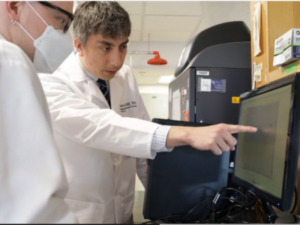
| Esther H. Chang, Ph.D. |
|
Georgetown University
Cancer research efforts have traditionally followed a long, tortuous path from initial inception in the research lab to widespread clinical application. This circuitous route frequently requires researchers to clear strenuous but important hurdles before an untested treatment is ready for human trials. Even then, many conditions must be met before the new therapy becomes widely available to cancer patients. So, when it comes to fighting devastating diseases like cancer, researchers are understandably seeking ways to safely expedite the route from bench to bedside.
Esther Chang, PhD, a microbiologist at Georgetown University's Lombardi Cancer Center in Washington, D.C., has focused her research efforts on testing new therapies while administering existing, proven medications. By taking this novel and innovative approach, Dr. Chang speeds the clinical implementation of promising treatments while still offering patients tried-and-true care regimens. She has also focused on the p53 tumor suppressor gene to determine what stops its cancer-inhibiting ability. NFCR Research
Super-targeting tumors using nanoscale drug delivery system New nanotechnology-based cancer treatment developed by Dr. Chang could greatly increase the effectiveness of radiation and chemotherapy while simultaneously reducing the side effects. Her nano-delivery system uses microscopic nanoparticles that are about a millionth of an inch across. Equipped with a cellular "GPS system", these smart drug-carrying vehicles not only accurately locate primary tumors, but also seek and target metastasized tumor cells that have spread to other parts of the body. Once accessing the targeted tumor cells, the nanoparticles directly deliver the therapeutic agents it carries to the targeted cells, driving them downhill to death. Now highly concentrated within the tumor cells, these anti-cancer therapeutics generate powerful cancer killing effects in a dosage that is much lower than in conventional treatment, greatly increasing their effectiveness. In addition, the unique tumor-targeting feature of the nano-delivery system also allows normal healthy cells to be spared, thus minimizing harmful side effects. Nanoparticles that contain tumor suppression gene, p53 In recent years, Dr. Chang has successfully reversed tumor resistance to chemotherapy and radiation therapy by delivering the p53 tumor suppressor gene to tumor cells in a complex model using her nano-delivery. More than one half of all cancers have mutations in their p53 gene and earlier work of Dr. Chang and others has shown that there is strong correlation between p53 gene mutation and tumor drug resistance. Dr. Chang's team created a lipid based nanoparticle which contains p53 gene inside. Their studies in tumor models showed that restoring the lost function of the p53 gene in the cancer cells made them sensitive to radiation and chemotherapy again. The p53 tumor-targeting nanocomplex therapy is a safe, non-toxic potential anti-cancer therapeutic agent from its recent evaluation that treated patients with advanced solid tumors including breast cancer in a phase I clinical trial. The nanoparticle is now advancing to the next phase of clinical trials. Nanoparticles that contain an agent to inhibit tumor promoting molecule, HER-2 The beauty of Dr. Chang's nano-delivery system also lies in its capability of carrying a variety of anti-cancer agents. Only about 30% of breast cancer patients are deemed eligible for the anti-HER-2 antibody treatment because their breast cancer cells express high levels of the tumor promoting molecule HER-2. However, even low levels of the HER-2 protein may promote abnormal growth, and a strategy that targets tumors with varying levels of HER-2 would likely help more breast cancer patients. In her recent preclinical experiments, Dr. Chang's nano-delivery system transported a payload of an anti-HER-2 agent into low level HER-2 tumors, causing tumor shrinkage and sensitization to chemotherapy. These data suggest that patients may be given lower doses of chemotherapy and experience less debilitating side effects. With continued success in Dr. Chang's pre-clinical research, this innovative cancer therapy combined with chemotherapy may advance to clinical trials to treat breast cancer patients with high and low levels of HER-2, providing many more women with an effective anti-HER2 treatment for their cancer. In addition, the anti-HER-2 agent delivered via this smart nano-delivery approach has also shown significant anti-cancer effects in pancreatic, lung, and colorectal cancer cells. Impact on Cancer Prevention, Treatment, or CureNFCR has been supporting Dr. Chang's innovative research since 1988 and we are proud that our long term support has paid off. Dr. Chang's novel drug delivery system may one day provide doctors a tiny yet enormously powerful weapon to treat cancers that are resistant to radiation and chemotherapy, offering more effective treatment and more hope to cancer patients. To support this and other research, please click here. |

Project Director Expertise