
Curt I. Civin, M.D.

University of Maryland
School of Medicine

"Transduction of Human Hematopoietic Adult Stem Cells"

Bone marrow transplants have become an important treatment option for many kinds of cancer. In this procedure, high doses of chemotherapy or radiation are administered to help destroy cancer cells. However, these powerful treatments also decimate bone marrow, requiring a transplant so the patient's body can produce new, healthy blood cells.

By identifying the parent blood cell, called a stem cell, responsible for the formation of all types of blood and immune system cells, researchers and physicians have been able to improve the effectiveness and reduce the side effects of traditional bone marrow transplants.

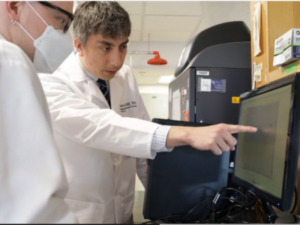
curt_civinIn fact, when parent stem cells from the blood, rather than from the bone marrow, are used for the transplant, they regenerate the blood supply faster for the best possible results. In addition, the use of purified stem cells reduces the likelihood that there will be a dangerous immune system rejection of the transplanted marrow, making this procedure more available to patients with a range of cancers and immune system disorders.

Isolating this parent blood cell has other benefits, too. Most important of all, it allows researchers to study how these cells divide to re-create new copies of themselves. This opens the possibility that these cells can be manipulated or altered to correct and prevent serious diseases. Called gene therapy, this technique may provide a way to switch off cancer and other diseases before and even after they take hold.

NFCR Fellow Expertise

In 1982, oncologist Dr. Curt Civin at Johns Hopkins University School of Medicine discovered a way to identify stem cells, isolating them in a series of laboratory experiments. His groundbreaking stem cell research has resulted in new tools in use today for diagnosing leukemia and purifying stem cells for research and clinical stem cell transplantation.

NFCR Research Overview

Once he had isolated stem cells, Dr. Civin hypothesized they might have a unique property on its surface, called an antigen. To identify this antigen, he developed an antibody, or cellular defense mechanism, that would target the antigen when it was introduced into the cell, revolutionizing basic research and providing new treatment options in transplantations.

NFCR Research Findings

Dr. Civin's work as an NFCR Fellow focuses on developing a better understanding of how stem cells function. By learning how to stimulate the renewal process of the stem cell, Dr. Civin hopes to develop a way to produce a significant supply of donor stem cells for cancer patients in need of specialized bone marrow transplants.
This new and potentially life-saving form of transplant, called a stem cell graft, allows a physician to administer higher and more effective doses of chemotherapy or radiation, while reducing the threat that the new marrow will be rejected by the patient's immune system.

Use of stem cells to correct genetic diseases

As an NFCR researcher, Dr. Civin has also determined that stem cells can be used to correct genetic diseases of the immune system, such as severe combined immunodeficiency disease (SCID), a genetic disorder caused by a missing enzyme that shuts down the body's ability to combat disease. A stem cell graft that includes donor stem cells and the missing enzyme can replace the defective cells with healthy cells that will repopulate the patient's blood supply.

Reducing the risks of graft-versus-host disease during bone marrow transplantation

Bone marrow transplantation is a life-saving procedure used in patients with leukemia and other diseases to replenish their vital blood-forming system, which is often destroyed by high-dose chemotherapy treatment. However, the very same procedure may cost a patient's life if a severe complication known as the graft-versus-host disease (GVHD) occurs. When a patient receives a bone marrow transplant from a donor (allogeneic transplant), a subset of the immune cells from the transplant can be activated to mount vigorous immunologic attacks on the patient's (the recipient's) tissues, causing GVHD. Dr. Civin and his team have developed a unique strategy in the laboratory which sends the anti-recipient immune cells onto a suicidal path, while keeping intact the "recipient-friendly" cells from the transplant, which is essential for successful blood replenishment in the patient. This method is now in the pre-clinical testing, and with continued success, the strategy will be used to treat patients in clinical trials.

MicroRNAs - potential new anti-leukemia therapy

MICRORNAs are a mysterious group of tiny cellular molecules-different from other RNA molecules and do not participate in protein production in the cell. Until recently, microRNAS were thought to be junk RNA or "molecular sawdust" from the degradation of larger RNA molecules. Research has recently shown that microRNAs play an important role as regulatory molecules that can control complex processes such as normal human development and cancer. Dr. Civin's team discovered that microRNAs act as "master molecular switches" in normal blood cell formation and in leukemias, publishing the first study to systematically examine the expression and actions of microRNAs in human blood-forming stem-progenitor cells (HSPCs). Dr. Civin's research has pinpointed two microRNAs may function in normal blood cells to suppress the development of leukemias. His team is further characterizing these microRNAs with the goal of developing avenues to target microRNAs as novel therapeutics to treat leukemia.

Impact on Cancer Prevention, Treatment, or Cure

Dr. Civin's work has far-reaching implications for cancer patients. First and foremost, Dr. Civin's research provides hope for more effective treatments with fewer side effects. Meanwhile, the stem cell grafts he has pioneered minimize the risk of reintroducing cancerous tumor cells that have metastasized or spread to the bone marrow. This is often the case in solid tumors in children, breast cancer, small cell lung cancer, lymphoma, and ovarian cancer. His laboratory is unraveling the roles and effects of selected microRNAs in normal hematopoietic cell development and in leukemias with the goal of developing novel treatments that will cause the selective death of leukemia cells including the leukemia stem cell population.

To make a donation to support this and other research, click here.


Sign Up Now!

Sign up now to receive cancer prevention tips, research updates, monthly recipes, news and events, and more!

Name:
Email:


NFCRfacebook2 NFCRtwitter2 causes