
Webster Cavenee, Ph.D.

Ludwig Institute for Cancer Research
University of California at San Diego

licr_logo

Developing New Therapies to Treat Brain Tumors

The onset, as well as the increase of malignancy of human cancers, is a result of the occurrence and accumulation of genetic defects. In many types of cancer, these genetic defects involve either the under-expression of tumor suppressor genes, over-expression of tumor causing genes (oncogenes), or both. Identifying these genes and then validate their functional activities in tumor models is a critical approach for cancer researchers to understand cancer biology. More importantly, when scientists gain enough knowledge about the molecular mechanisms by which these genes impact the development or malignant progression of cancer, they can develop novel therapeutic strategies that either specifically target the products of oncogenes or reverse the mutations of tumor suppressor genes or their effects in cancer cells.

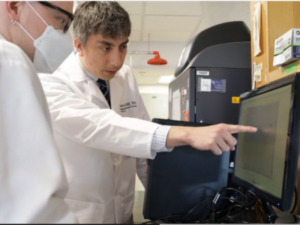
webster_cavenee_studentsNFCR Fellow and Expertise

NFCR Fellow Dr. Webster Cavenee is a pioneer in our understanding of the role that hereditary predisposition plays into the development of cancer. He is the director of the Ludwig Institute for Cancer Research and distinguished professor at the University of California, San Diego. He is a member of the National Academy of Sciences and the Institute of Medicine. Dr. Cavenee has been leading his research group in identifying genes whose mutation or altered expression lead to the development, and malignant progression of tumors. Dr. Cavenee was recently awarded the 2nd Annual Albert Szent-Györgyi for Progress in Cancer Research for his groundbreaking discoveries regarding the genetic mechanisms of predisposition to human cancer. His research provided the first genetic evidence for the existence of tumor suppressor genes, which is considered one of the most influential breakthroughs in cancer research. For more information about Dr. Cavenee's award-winning research, CLICK HERE.

Research Focus

Identifying genetic abnormalities in brain tumors

In recent years, most of his research efforts have been concentrated on astrocytic gliomas such as glioblastoma, a very aggressive cancer of the central nervous system in both adults and children. Several years ago, Dr. Cavenee's group discovered that an abnormal version of the Epidermal Growth Factor Receptor (EGFR), named EGFRvIII, is commonly found in primary brain tumors such as gliomas.

In a normal healthy cell, growth factor receptors such as EGFR are inactive unless they bind to their perspective ligand (EGF in this example) on cell surface. The activation of EGFR turns on cascade of events through signaling pathways within the cell and eventually leads to cell proliferation. Under normal circumstances, these events are tightly controlled. However, a genetic mutation may render the controlling mechanism useless, resulting in uncontrolled and aberrant cell growth, or cancer. Dr. Cavenee found that the mutated EGFR, or EGFRvIII is constantly active and transmits growth signals without the binding of their ligand. In tumor models, such signaling has a dramatic effect on enhancing the growth of glioma cells. What's more, Dr. Cavenee found that EGFRvIII is only present in the most rapidly progressing tumors in humans.

From new targets to new targeted therapies

This intriguing discovery strongly indicated that the EGFRvIII may be an important molecular target for developing novel therapeutics. In fact, his team developed monoclonal antibodies, small molecules, and nucleic acid based therapeutics as EGFRvIII inhibitors to target this tumor-specific molecule. One of the EGFRvIII- targeting monoclonal antibody was successfully tested in a Phase I clinical trial with encouraging results: the drug was shown to target and concentrate in the brain tumors without causing significant side effects. This intriguing discovery strongly indicated that the EGFRvIII may be an important molecular target for developing novel therapeutics

Discovery of a new gene that may lead to enhanced treatment efficacy

While currently used anti-cancer therapies targeting EGFRvIII are initially effective, many times the cancer develops resistance to targeted therapies, allowing the tumors to grow again. The Cavenee team has recently discovered a unique gene in glioma cells, KLHDC8A or SΔE1, which may be the molecule that enables the gliomas to resist EGFR-targeting drugs and continue to grow through an alternative molecular pathway. Dr. Cavenee believes strategies that combine current targeted cancer therapies against EGFR with drugs that would block this escape pathway may greatly increase the effectiveness of treating glioblastoma, and give patients a better chance against this lethal brain cancer.

Impact on Cancer Prevention, Early Diagnosis, and Treatment

Astrocytic gliomas are lethal malignancies in the adult and children central nervous system. In order to develop effective treatments, scientists must first figure out the initial genetic errors that lead a cell to become cancerous. Dr. Cavenee's work is bringing us one step closer to finding the answer to this seminal question. By understanding the fundamental issue of how genetic lesions influence tumor development and progression, new and more effective therapeutic strategies can be developed to save more lives. NFCR has been supporting Dr. Cavenee's vital research since 2002, and will continue to fund his innovative research to find improved treatment, and eventually cures for brain tumors and other types of cancer.


Sign Up Now!

Sign up now to receive cancer prevention tips, research updates, monthly recipes, news and events, and more!

Name:
Email:


NFCRfacebook2 NFCRtwitter2 causes