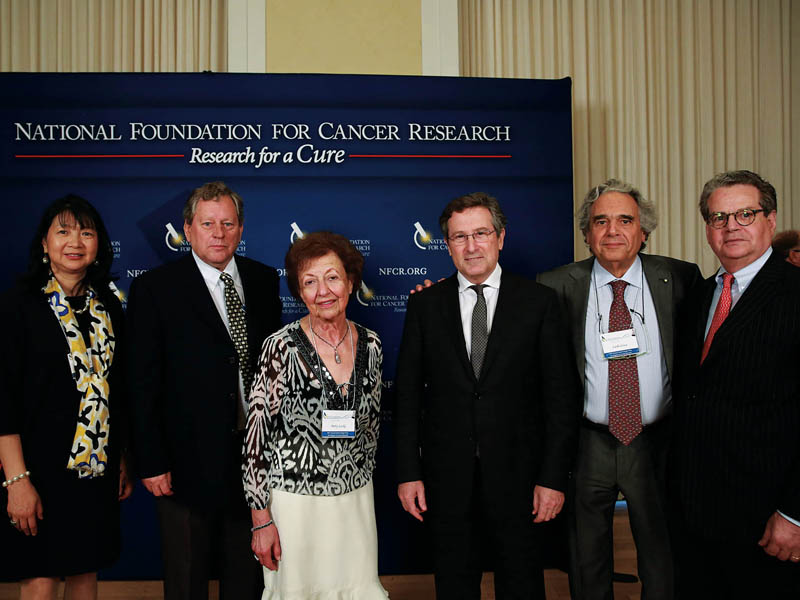

NFCR is unique in many ways, but the most essential aspect of this organization is the community we have helped build. From the core team at NFCR to our partner organizations such as AIM-HI Accelerator Fund (AIM-HI), Global Coalition for Adaptive Research (GCAR) and Asian Fund for Cancer Research (AFCR), to the researchers we support globally, to our 5.3 million donors who help make everything we do possible, to the cancer patients and survivors who motivate us every day to advance the NFCR mission of finding cures for cancer, our community is very strong and unified.
We are all part of the cure. We invite you to find your part and join forces with NFCR. Together, we will go further and help the world live without cancer
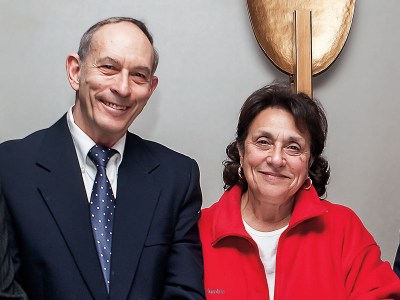
In the mid-1970s, retired high school biology teacher from Brooklyn, NY, Anthony (Tony) Pratt wanted to do something about the metastatic breast cancer that took his mother’s life. He read an article about Nobel laureate Albert Szent-Györgyi’s goal to eradicate cancer. He wrote to Dr. Szent-Györgyi expressing his desire to support the pioneer’s basic research. A grateful letter from Dr. Szent-Györgyi suggested Tony send any contributions to the National Foundation for Cancer Research. And Tony and his wife Marjorie made the first of their monthly donations to NFCR which continue to this day.
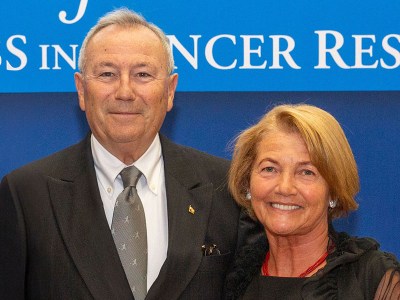
Arnold and Helen Klein are immigrants from Slovakia who faced incredible economic and physical challenges when they first arrived in the U.S. After years of hard work, Arnold became a successful entrepreneur and has been free of Chronic Myelogenous Leukemia (CML) for 20 years. The Kleins have been generous supporters of NFCR since 2010, funding research projects and saving lives. They have established the Arnold and Helen Klein Fund for Cancer Research, which will have a long-lasting impact on NFCR’s scientific program.
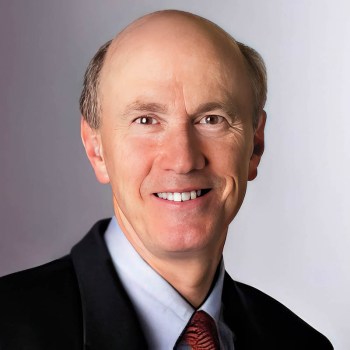
Since 2005, former Home Depot CEO Frank Blake has supported NFCR through monthly donations with 200-plus gifts. In a recent presentation to nonprofit professionals, Frank was asked to explain his personal theory on generosity. He humbly replied, “Expressing generosity, expressing kindness, living in an ‘other-focused’ way is one of the most important journeys you take in life.” His deep passion for cancer research stems from the loss of several siblings and other family members to cancer. Through his decades of support to NFCR, his action encourages others to embark on their own journey of generosity to support NFCR with the confidence that they, too, can make cures possible.
Jim Nickelsporn, a compassionate attorney in Maryland, near NFCR’s headquarters, has always supported people in their time of need. Sadly, he lost his father to kidney cancer, and his mother survived colon cancer. The cancer prevalence in his family convinced Jim and his sister to begin their checkups every three years. For 20 years, Jim has given to NFCR to support high-risk/high-reward research. Jim tells NFCR, “Research must take risks, and I know that one day, a cure will be found. I support NFCR to carry out the searches for the cure.” His commitment includes numerous gifts through the NFCR honor and memorial program. Commitment to cancer research, compassion for those in need, and a healthy lifestyle is Jim Nickelsporn’s equation for living well.
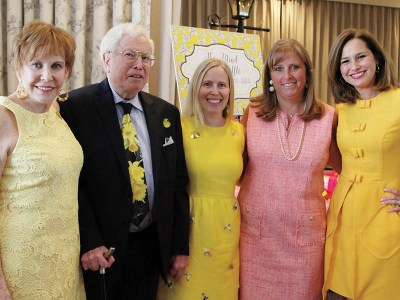
Bethesda, Maryland’s Alice-Anne Birch and a dozen of her friends founded the Daffodils & Diamonds Luncheon Group to honor loved ones who have succumbed to cancer. Working with NFCR since 2005, this group of accomplished women and their annual luncheon have raised more than $1.4 million to support our scientists to develop new treatments specifically for breast, ovarian and lung cancers. The luncheon hosts more than 300 like-minded individuals, who have been inspired by hearing from NFCR-supported researchers and entrepreneurs and helped launch several high-risk/high-impact projects.
In 2006, Ken and Marianne Bouldin established the Hope Fund for Sarcoma Research in partnership with NFCR after their daughter was diagnosed with an aggressive sarcoma subtype: malignant peripheral nerve sheath tumor (MPNST). Only minimally sensitive to chemotherapy and radiation, MPNST patients typically face a five-year overall survival range of just 30% to 50%. Thanks to the Hope Fund, NFCR scientists developed the first clinically annotated database and microarray of MPNST tissue to identify molecular biomarkers including one that is a prognostic indicator and a potential new target — one step closer to a cure.
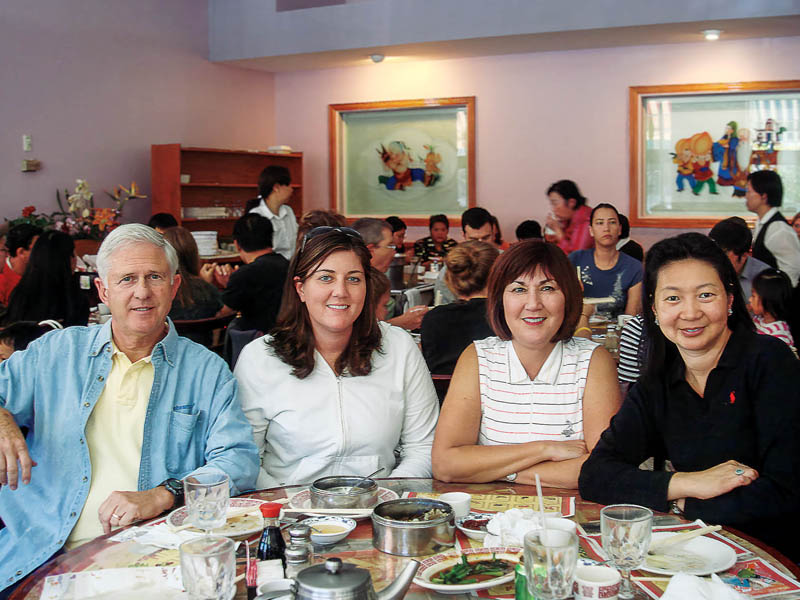
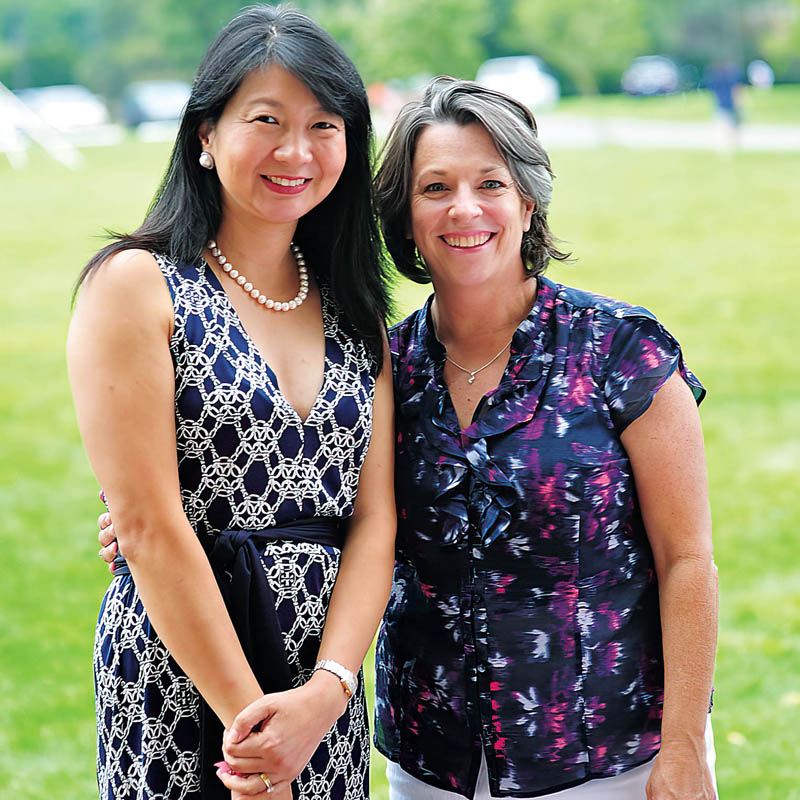
Lucy Stanovick, a college professor and mother of two, was diagnosed with Stage IV metastatic breast cancer in 2008 at age 42. But she quickly turned her passion for fighting her disease into something bigger — the Lucy Fund for Metastatic Breast Cancer Research at NFCR. The Lucy Fund supports NFCR scientists focused on metastatic cancer research. A year after her diagnosis, Lucy also created the annual “Party 4 Life,” a festival with her friends, family and community to raise even more funds. Though Lucy attended her last “Party” in 2012, she’ll be remembered for her charismatic personality, love for her family, friends and students. Her family continues her legacy to raise awareness and funds for metastatic cancer research.
Betty Locke is a champion of cancer research. Her father passed away from liver cancer when she was 12 years old. Then, her husband died in 2001 from the same type of cancer. Betty has loved to travel since she was a little girl. Today, at 92 years young, Betty has combined two of her greatest passions — traveling and helping others through funding cancer research. Since 2008, Betty has been generously supporting NFCR to find cures for cancer. Betty regularly attends NFCR’s Annual Global Summit, where she catches up on breakthroughs and her NFCR family.