That beginning still shapes NFCR today. Born from a scientist’s need for the freedom to follow bold ideas, NFCR provides critical seed funding for high-risk, early-stage research that other funders often overlook. It gives scientists room to explore, and it brings researchers together across disciplines to carry discoveries from the bench toward the bedside.
From theories to cures
Our history and partnerships
Founding story
How NFCR began
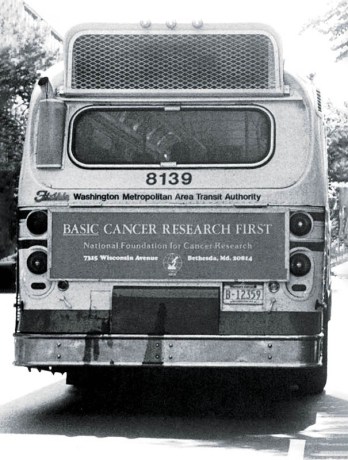
In the early 1970s, Nobel laureate Dr. Albert Szent-Györgyi was struggling to secure funding for cancer research. Government grants asked scientists to describe their plans in advance, yet he argued that the whole point of basic research was to venture out into the unknown. Franklin Salisbury, Sr., a Washington, D.C. attorney and business entrepreneur, sent him a $25 donation. Szent-Györgyi replied that a donation means much more than its dollar equivalent. The exchange sparked a collaboration, and together they began a grassroots effort to fund a cure. Direct-mail appeals drew enough public support to establish the National Foundation for Cancer Research in 1973, with the two men as co-founders. That beginning still shapes NFCR today. Born from a scientist’s need for the freedom to follow bold ideas, NFCR provides critical seed funding for high-risk, early-stage research that other funders often overlook. It gives scientists room to explore, and it brings researchers together across disciplines to carry discoveries from the bench toward the bedside.
The moments that moved us forward
Milestones and timeline
Franklin Salisbury, Sr., a Washington, D.C. attorney and business entrepreneur, sent him a $25 donation. Szent-Györgyi replied that a donation means much more than its dollar equivalent. The exchange sparked a collaboration, and together they began a grassroots effort to fund a cure. Direct-mail appeals drew enough public support to establish the National Foundation for Cancer Research in 1973, with the two men as co-founders.
- 1973
NFCR is established
Franklin and Tamara Salisbury work with Nobel Laureate Albert Szent-Györgyi to establish NFCR and advance cancer research.
- 1980s
Supporting pioneering research
NFCR backs foundational research, including Dr. Harold Dvorak’s groundbreaking work on tumor angiogenesis and VEGF.
- 2001
Expanding research globally
NFCR establishes the Centre for Computational Drug Design at Oxford, bringing researchers together to accelerate drug discovery.
- 2006
The Szent-Györgyi Prize
NFCR establishes the Szent-Györgyi Prize to recognize major advances in cancer research. Dr. Harold Dvorak receives the inaugural award.
- 2019
GBM AGILE advances clinical research
NFCR helps advance GBM AGILE, a global adaptive clinical-trial platform accelerating the search for new glioblastoma treatments.
- 2023
50 years of impact
NFCR marks five decades of supporting transformative cancer research and global scientific collaboration.
Today
Research for the next breakthrough
NFCR continues to support high-impact research and collaboration to make cures possible for all types of cancer.
We can do more together
Partners and institutions

AIM-HI Accelerator Fund

Global Coalition for Adaptive Research