Research by Type:
| Yung-Chi Cheng, Ph.D. |
|
Yale University School of Medicine
Developing and improving drugs for better treatment of cancer and related diseases Major advances have been made toward curing cancer through chemotherapy drugs. And scientists have made progress in managing the debilitating side effects associated with therapy, such as viral infections. But if you know someone who recently has undergone chemotherapy, you know that there still is room for great improvement. There is also a critical need to understand why some chemotherapy patients develop a resistance to the drugs used to treat them. By developing new chemotherapy drugs (and improving the use of those already clinically proven) basic research scientists hope to increase the quality of treatment and the hope for prevention of cancer and cancer-related viral diseases, such as HIV, hepatitis B, and herpes.
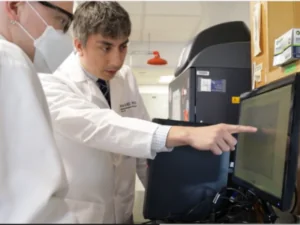
Yung-Chi Cheng, Ph.D., is the leading expert on biochemical and molecular pharmacology. He is the Henry Bronson Professor of Pharmacology at the Yale University School of Medicine specializing in cancer and viral chemotherapy. Dr. Cheng's research goals are to explore new chemical entities for the treatment of cancer and viral diseases and to improve the chemotherapeutic agents currently being used. Because research in pharmacology requires a knowledge of many areas of science, Dr. Cheng's team at Yale is a multidisciplinary one which includes the study of structural biological aspects of pharmacology, molecular pharmacology, clinical pharmacology, and medicinal chemistry. NFCR Research Overview The National Foundation for Cancer Research supports Dr. Cheng's efforts to develop new antiviral compounds by studying the functional roles and properties of the proteins specific to viruses such as herpes, hepatitis B and C, and human retroviruses like HIV. This knowledge enables Dr. Cheng to design selective anti-viral compounds by taking advantage of those unique viral behaviors. Dr. Cheng also is exploring the mechanisms of drug toxicity, drug resistance, and development of drug resistance, with a specific emphasis on the process involved in gene amplification and extra chromosomal DNA replication. Dr. Cheng has a vital research program on establishing the benefits of Traditional Chinese Medicine (TCM). For over ten years, we have supported this important area by providing both "seed" funding and ten years of sustained funding and the benefits of Dr. Cheng's research on TCM are being realized by cancer patients today. NFCR Research Findings One of the traditional Chinese herbal medicine formulas Dr. Cheng has been studying is comprised of four different plants and is called PHY906. Described more than 1,700 years ago, PHY906 was used to treat headache, fever, swelling and gastrointestinal problems. Using modern biochemical and pharmacological technology, Dr. Cheng's research group analyzed the ingredients of PHY906, and found that this formula may deliver much more benefits than what's been known - the laboratory research demonstrates it enhances the anti-cancer properties of multiple chemotherapeutic drugs as well as ameliorates the drugs' toxic side effects, and thus could be a very beneficial adjuvant therapy to be used together with chemotherapy for cancer treatment. Dr. Chen's team has demonstrated that PHY906 enhances the anti-tumor effects of chemotherapy by changing the tumor tissue microenvironment from a chronic to acute inflammatory. Chinese herbal medicines are typically comprised of a variety of ingredients, making consistent preparations of the formula a challenge. As inconsistent preparations of the same formula may generate different results in patients and may cause undesired side effects by the impurities, overcoming this challenge becomes the key to success in producing Chinese herbal remedies. Dr. Cheng's team has developed a very novel methodology, which involves cutting-edge chemical, bioinformatics and biological techniques, to ensure that the quality of this formula, derived from four different plants, is consistent in each preparation. The laboratory research and advanced formula preparation methodology developed by Dr. Cheng's team have led to multiple clinical trials on PHY906 as a beneficial adjuvant to reducing the unpleasant side effects of chemotherapy in the treatment of pancreatic, liver, and colorectal cancer. This is a breakthrough result as there is currently no consistent way to treat these side effects in patients undergoing chemotherapy. A phase II trial treating colorectal cancer patients with PHY906 as they undergo chemotherapy will begin soon, the last of its test before seeking approval by the FDA. Future Research Goals Dr. Cheng continues to develop new anti-cancer/anti-viral drugs for hepatitis B and C and HIV. His research on PHY906 will focus on the mechanism of action of how this formula reduces the gastrointestinal side effects of chemotherapy and how it may enhance the anti-tumor effects of chemotherapy. Impact on Cancer Prevention, Treatment, or Cure Dr. Cheng's research is having a major impact on both the basic science in the area of DNA repair but also for the prevention and treatment of cancer and cancer-associated viral diseases. PHY906 holds the promise of becoming one of the first oral herbal medicines approved by FDA for cancer treatment. In addition, the technology developed in Dr. Cheng's laboratory could be useful as a platform technology for upgrading research and development of other herbal medicines, and eventually help to bring the rich herbal resource to benefit cancer patients, helping them in their fight against cancer. Importantly, this breakthrough represents a paradigm shift in the way the cancer research community thinks about Traditional Chinese Medicine, opening minds to new approaches to treating cancer using these ancient medicines which have the potential to provide new and more effective options for treating cancer patients.
For more information, click here. |


NFCR Fellow Expertise