Cancer Type:
| Colon Cancer |
|
Background Background Below are brief descriptions of two outstanding research projects NFCR is currently supporting in our quest to deliver new hope for colorectal cancer patients. Dietary Micronutrient Selenium to Protect against Colon Cancer Helmut Sies, M.D. Since 1983, NFCR has been supporting Helmut Sies, M.D., a biochemist and one of the world's leading experts in cancer prevention and nutrition. Micronutrients are necessary vitamins and minerals that are needed in small quantities to keep our body healthy. Dr. Sies has made numerous breakthrough discoveries, such as the micronutrient lycopene found in tomatoes, which has powerful antioxidant properties that prevent oxidation or the damage to cells by free-radicals-the largest environmental cause of cancer. Dr. Sies, at the Heinrich Heine Universität in Düsseldorf, Germany, is now focusing on selenium, another essential micronutrient. Dietary selenium is incorporated into selenoproteins-critical cell proteins in our bodies that have anti-oxidation functions. The Sies team will focus on two selenoproteins that research shows have abnormal activity and expression levels in different tumor cells including colorectal cancer tissues. There is strong clinical evidence that suggests a beneficial role for selenium in preventing and treating colorectal, prostate, lung, and liver cancer. Dr. Sies' research is of high impact as it will characterize the molecular targets of selenium in normal and cancer cells. This much-needed information will improve protocols for future intervention trials utilizing selenium supplements or selenoproteins. NFCR applauds Dr. Sies' innovative research on cancer prevention and nutrition-that helps to formulate guidelines for cancer researchers and clinical trials, and for the general public to lower their risk of cancer through healthy nutrition. Shutting Down Cancer Harold Dvorak, M.D Unlike other anti-cancer drugs that directly kill tumor cells, drugs that target vascular endothelial growth factor (VEGF) do so by preventing nutrients from reaching tumors. VEGF is a molecule that tumors secrete to induce new small blood vessels, which in turn provide nutrients and oxygen for tumors to grow and spread, a process called angiogenesis. NFCR scientist Harold Dvorak, M.D., at Beth Israel Deaconess Medical Center, is the pioneer who discovered VEGF nearly thirty years ago. His discovery fostered the entire field of vascular biology and years later spawned the development of bevacizumab, the first anti-VEGF drug. In 2004, bevacizumab, trade name AvastinTM, was approved by the Food and Drug Administration for first line treatment of metastatic colon cancer. In the years since, Avastin has been approved for other leading types of cancer, including: lung, brain, and kidney cancers. As is common with many anti-cancer drugs, Avastin is not a "silver bullet" treatment that works for every patient with colorectal cancer. Dr. Dvorak's research suggests that the many types of small tumor blood vessels, each with different structural and molecular properties, may not be targeted by Avastin. Consequently, some patients' cancer fails to respond to the specific molecular mechanism which makes Avastin's anti-angiogenic effect possible. With NFCR funding, the Dvorak team has recently made another exciting discovery: the blood in all of the thousands of small, new tumor blood vessels is supplied and drained by only a few newly-formed, large arteries and veins. The researchers are forging ahead to seek new ways to target these large blood vessels, an effect that could cut off the main blood supply to all the tumor vessels and inhibit or even stop the tumor's normal drainage of blood. First, the Dvorak team is identifying ways to prevent, in the first place, the formation of these large vessels and secondly, they will determine unique molecular biomarkers on the large vessels that have already formed in the tumor that can serve as targets for drugs that will shut them down. With continued success in his laboratory, Dr. Dvorak may provide researchers with unique targets around which new and more effective anti-angiogenic drugs can be developed for colorectal cancer patients. New Biomarker Development Wei Zhang, Ph.D. Sensitive, non-invasive biomarkers that can facilitate detection, staging, and prediction of therapeutic outcomes are urgently needed to improve survival rates and help to determine optimal treatment for colorectal cancer patients. NFCR Scientist Wei Zhang, Ph.D., at MD Anderson Cancer Center in Houston, is conducting cutting-edge research on microRNAs as biomarkers in colorectal cancer. MicroRNAs are a group of tiny cellular molecules that are closely associated with cancer development and progression. In addition, research suggests that alteration of certain microRNAs can modulate sensitivity to cancer therapies. Dr. Zhang is identifying microRNAs as biomarkers for diagnosis of colorectal cancer and its recurrence, clinical staging of the disease, and predicting which patients will become resistant to current therapies. Using blood samples from healthy donors and patients with stage I through IV colorectal cancer, Dr. Zhang and his team have confirmed one microRNA molecule that may predict the outcome for stage IV colorectal cancer patients. Moreover, this microRNA was found in blood samples of patients from two ethnic populations, strengthening its validity as a biomarker. This biomarker can be potentially used to monitor and predict therapeutic outcome of patients with advanced disease, helping physicians to tailor the most effective treatment for each patient. Dr. Zhang is continuing his quest to identify microRNAs that could serve as blood biomarkers of early stage colorectal cancer and its recurrence and could be translated into clinical applications to save lives. Stopping Colon Cancer's Lethal Spread Only 12% of patients with stage IV colon cancer, the stage in which cancer has spread or metastasized to distant sites in the body, survive longer than five years. Research progress towards effective therapies to stop colon cancer metastasis has been hampered by the lack of a deeper understanding of the molecular mechanism of this complex process. In addition, there is a lack of appropriate metastatic colon cancer model systems for researchers to use in testing their hypotheses regarding the molecular factors driving cancer cells to spread. Many researchers have shied away from the complex biology of metastatic cancer and that is why NFCR supports Danny Welch, Ph.D., a world leader in metastatic cancer research. At the NFCR Center for Metastatic Research at the University of Kansas Medical Center, Dr. Welch has led his collaborators from universities across the United States to discover six metastasis suppressor genes in various types of metastatic cancer. Now, the team will use cutting-edge techniques to determine if two of these genes, KISS1 and BRMS1, and any other genes, play a role in colon cancer metastasis. In addition, Dr. Welch's team will develop the first model system of metastatic colon cancer to enable testing of the identified genes and other molecular factors that drive colon cancer cells to spread. The impact of the Welch team's research could be very significant, since it could lead to the development of novel anti-cancer therapies to prevent colon cancer metastasis or keep it in a dormant state, putting the cancer under control and giving patients better opportunities to cure the cancer or live longer. Chinese Herbal Medicines Yung-Chi Cheng, Ph.D. The therapeutic effects of traditional Chinese medicines (TCM) have been documented for centuries but have been regarded by modern medicine as "alternative therapy" because there was little scientific proof that it works "as advertised." For the past decade, with NFCR support, Dr.Yung-Chi Cheng, of Yale University School of Medicine, explored the therapeutic properties of PHY906, a Chinese herbal medicine formula of four herbs described 1,700 years ago. NFCR is proud that our long-term commitment to Dr. Cheng and his team is paying off: in a landmark 2010 paper, Dr. Cheng's team showed through Phase I and Phase II clinical trials that treatment with PH906 combined with chemotherapy alleviates the unpleasant gastrointestinal side effects of chemotherapy given to colon and rectal cancer patients. Moreover, their laboratory research demonstrated that PHY906 also has its own anti-tumor effects. Their ongoing research is identifying the molecular targets of this ancient herb formula. With continued success in Phase II trials, PHY906 could become one of the first FDA-approved oral herbal medicines for anti-cancer treatment. This breakthrough represents a paradigm shift in the way the cancer research community views traditional Chinese medicine. Dr. Cheng's research opens the door to new approaches to treating cancer using these ancient medicines and has the potential to give physicians a new and more effective option for treating many cancer patients. Tailoring New Drugs to the Right Patients Alan Sartorelli, Ph.D. laromustine is a promising new anti-cancer drug for patients with colorectal cancer and several other types of cancer. Earlier clinical tests of laromustine in leukemia patients showed that the drug only works well in 30% of those patients, and this may very well be the case for patients with colorectal cancer. In the era of personalized medicine, NFCR scientist Alan Sartorelli, Ph.D., who discovered laromustine, is working to ensure that the right patients are selected for this new drug. Dr. Sartorelli knows that laromustine has a unique molecular mechanism: only tumor cells with low levels of a protein called AGT are likely to respond to it. Dr. Sartorelli's team at Yale University School of Medicine will use a two-pronged research plan to determine tumor types that will respond to laromustine. First, in a wide variety of tumor samples and matched control tissues, his team will accurately measure the AGT protein using a reliable and simple AGT assay developed in his laboratory. Then the scientists will analyze the AGT gene in the tumor samples to assess how often certain cancers "turn off" the gene, causing these tumor types to be exceptionally responsive to laromustine. Dr. Sartorelli's research will determine a set of the tumor types sensitive to the drug-and this will assist clinical investigators to select and treat patients with colorectal and other types of cancer with a high likelihood of responding well to laromustine. These research projects hold great promise for yielding more effective therapies for colorectal cancer. With more funding, however, they could ramp up their efforts and accelerate progress to save more lives! When you donate to NFCR, your dollars help our scientists accomplish many important research goals aimed at developing better cancer treatment and prevention strategies. Click here to learn more. |

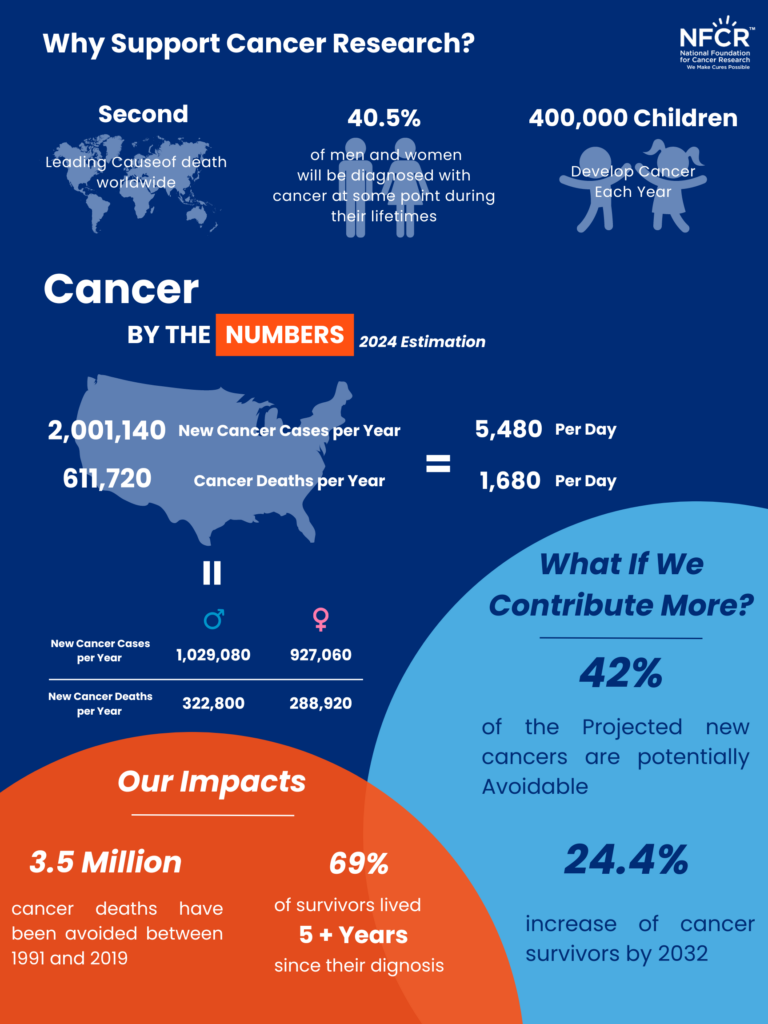
In the United States, an estimated 101,340 new cases of colon cancer and 39,870 new cases of rectal cancer will be diagnosed in 2011. In fact, colorectal cancer is the third most common cancer in both males and females and accounts for about 9% of cancer deaths each year.